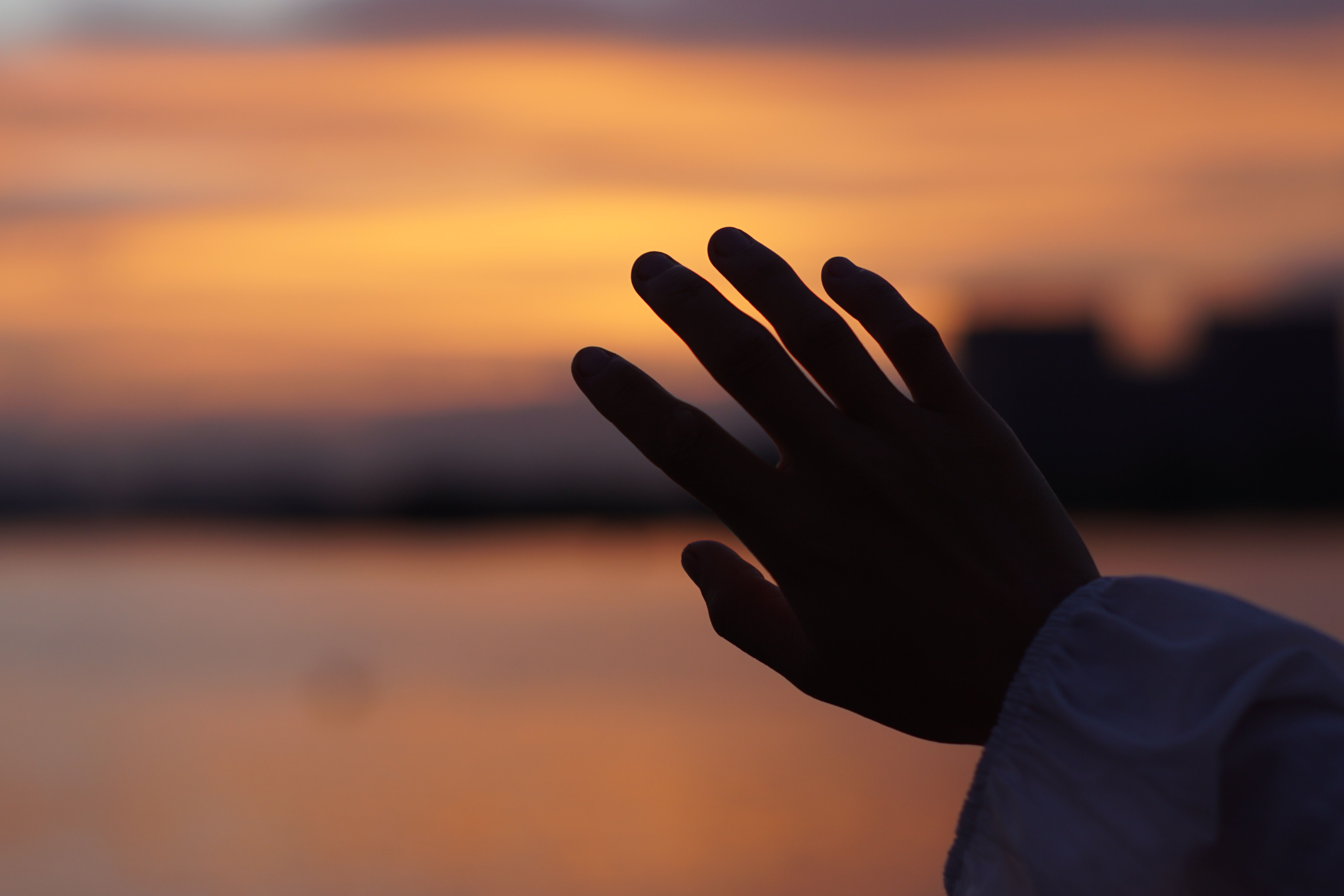
There is a moment in a Reiki session, usually somewhere between the third and fourth hand position, when something shifts. The room feels quieter. The body softens. Something that had been held for a very long time begins, carefully, to let go.
If you have experienced it, you already know what no amount of clinical language can fully capture. If you haven't, this guide is your beginning.
What Is Reiki?
Reiki is a Japanese healing practice that works with the body's natural energy field to promote deep relaxation, emotional balance, and physical wellbeing. The word itself comes from two Japanese characters: rei (universal) and ki (life energy) together, the animating force that flows through every living thing.
At its core, Reiki is the practice of channelling that universal life energy through the hands of a trained practitioner, supporting the recipient's body in returning to its own natural state of balance. It is non-invasive, deeply gentle, and suitable for people of every age, background, and belief system.
Reiki does not diagnose, treat, or cure in the medical sense. What it does has consistently, across decades of practice and millions of sessions, is create the conditions in which the body can heal itself.
Where Does Reiki Come From?
Reiki as a formal healing system was developed in Japan in the early twentieth century by Mikao Usui, a spiritual teacher and practitioner who received the system during a period of fasting and meditation on Mount Kurama in 1922.
Usui's original system, now often called Usui Reiki Ryoho, was brought to the West primarily through the work of Hawayo Takata, a Japanese-American woman who trained in Japan in the 1930s and introduced Reiki to Hawaii and then across North America. From there, the practice spread worldwide, branching into dozens of lineages and styles while retaining its essential character.
Today, Reiki is practised in hospitals, hospices, wellness centres, therapy rooms, and private homes on every continent. The World Health Organisation recognises it as a complementary health practice. The NHS in the United Kingdom offers it in certain oncology and palliative care settings. Millions of people practise it professionally. Many millions more have received it.
One of those lineages, Holy Fire® Reiki, carries the practice forward in a form that honours both the original Usui tradition and its continued evolution. Cadanna Llewellyn-Peart, founder of Tera, holds both Usui Reiki and Holy Fire® Reiki at Master Teacher level. The tradition matters because it shapes the quality of what is transmitted. On Tera, lineage is part of every practitioner's story.
How Does Reiki Work?
Reiki works through the understanding, shared across virtually every ancient healing tradition on earth, from Traditional Chinese Medicine to Ayurveda to indigenous practices across Africa and the Americas, that the human body is not only a physical structure but an energetic one.
When that energy flows freely, health tends to follow. When it becomes blocked, stagnant, or depleted, through stress, trauma, illness, grief, or simply the accumulated weight of living, the body struggles to maintain its equilibrium.
A Reiki practitioner, trained to sense and work with that energy field, uses gentle hand placements on or just above the body to support the release of what is held and the restoration of flow. The practitioner does not direct their own energy at the client. They act as a conduit, a clear channel through which universal life energy moves to wherever it is most needed.
The session itself is usually deeply relaxing. Many people experience warmth, tingling, a sense of floating, involuntary releases of emotion, or simply a profound and unusual peace. Some fall asleep. Many cry, gently and without quite knowing why. Almost everyone leaves feeling lighter than when they arrived.
What Happens in a Reiki Session?
A typical Reiki session lasts between 60 and 90 minutes, though sessions can be shorter or longer depending on the practitioner and context.
You will usually lie fully clothed on a treatment table, in a quiet, gently lit space. The practitioner will place their hands lightly on or above various positions on your body: head, neck, shoulders, chest, abdomen, legs, and feet, moving through a sequence that covers the major energy centres and organs.
There is nothing you need to do. You do not need to believe in Reiki for it to work. You do not need to be relaxed before you arrive. You do not need to talk, though some practitioners invite a brief conversation before and after the session.
Distance Reiki sessions conducted remotely, without physical presence, is also widely practised and, for many people, just as effective. It is one of the reasons Reiki translates so naturally to a global marketplace like Tera: a skilled Reiki practitioner in Lagos can work with a client in London. The energy does not require proximity.
What Are the Benefits of Reiki?
People seek Reiki for a wide range of reasons. The benefits most commonly reported, both in peer-reviewed research and in the lived experience of millions of recipients, include:
Deep relaxation and stress reduction.
The most consistent finding across Reiki research is its capacity to activate the parasympathetic nervous system. The body's rest-and-repair mode, reducing cortisol, lowering heart rate, and creating a state of profound calm that persists well beyond the session itself.
Emotional processing and release.
Reiki creates a held, safe space in which emotions that have been suppressed or carried without outlet can surface and move. Many people find that a single session shifts something that talk therapy alone had not reached.
Support during illness and recovery.
Reiki is widely used as a complement to conventional medical treatment, particularly in oncology, where it has been shown to reduce pain, nausea, and anxiety. It does not interfere with medication or treatment. It supports the body in tolerating and recovering from what it is going through.
Improved sleep.
Many regular Reiki recipients report significant improvements in sleep quality particularly the capacity to move through the night without the hypervigilance that stress and trauma leave in the body.
Clarity and a sense of inner alignment.
Beyond the physical, many people experience Reiki as a practice that reconnects them to something they had lost touch with. their own sense of knowing, their capacity for stillness, a feeling of being at home in themselves.
Is Reiki Safe?
Yes. Reiki has no known contraindications. It does not interfere with medication, surgery, or any other medical treatment. It is safe during pregnancy, safe for children, safe for the elderly, and safe for people in acute illness or end-of-life care.
The only caution that experienced practitioners consistently raise is this: Reiki can move things that have been held. In the days after a session, some people experience what is sometimes called a healing response: tiredness, emotional surfacing, and vivid dreams. This is not a negative reaction. It is the body processing what was released. Staying hydrated, resting where possible, and being gentle with yourself in the days after a session supports this process.
What Should I Look for in a Reiki Practitioner?
Not all Reiki practitioners are the same. The quality of a session depends significantly on the depth of the practitioner's training, their lineage, their own practice, and their capacity to hold a safe and professional space.
When choosing a practitioner, it is worth asking: What lineage or style of Reiki do you practise? How long have you been practising, and do you receive Reiki yourself regularly? What level are you trained to: Reiki I, II, or Master level? Do you hold professional insurance? What does a session with you typically look like?
On Tera, every practitioner is verified before going live. Their lineage, credentials, and training are part of their public profile. Reviews from real clients speak to the quality of their work. You are not searching in the dark.
The Different Levels of Reiki Training
Reiki training is structured in degrees, each of which unlocks a deeper level of practice.
Reiki Level I (Shoden) introduces the student to the energy and the foundational hand positions. Level I practitioners can offer Reiki to themselves, family members, and friends.
Reiki Level II (Okuden) introduces the sacred symbols that amplify and focus the energy, and opens the capacity for distance Reiki. Level II practitioners can work professionally with clients.
Reiki Master / Teacher (Shinpiden) is the highest level of training, enabling the practitioner to attune and teach others. It represents a deep and ongoing commitment to the practice. Not an endpoint, but an ever-deepening beginning.
Holy Fire® Reiki, the system practised and taught by Tera's founder alongside the foundational Usui tradition, carries an additional layer of refinement that many practitioners describe as a qualitative shift in the energy itself: cleaner, more powerful, and self-directing in a way that supports both practitioner and recipient at a deeper level.
Reiki and the Global Wellness Gap
There are an estimated two million Reiki practitioners worldwide. They practise in spare bedrooms and dedicated studios, in hospital rooms and corporate offices, in community centres and sacred spaces. They carry something genuinely valuable: a transmission of healing that has moved through lineages for over a century.
And the vast majority of them are invisible online.
The wellness industry, valued at over five trillion dollars and growing, has largely failed to create infrastructure that serves practitioners beyond the mainstream and the already-visible. Platforms are built for yoga studios and gym chains. The Reiki practitioner working from a healing room in Accra, the ancestral ceremony facilitator in São Paulo, the womb healer in Birmingham. They have no global front door.
That is what Tera was built to change.
Are You a Reiki Practitioner? This Is for You.
If you are reading this as a practitioner, whether you are newly qualified or have been working for twenty years, we built Tera for you.
Not for the platforms that already serve the already-visible. For you.
Tera gives Reiki practitioners a professionally designed, globally discoverable listing that showcases your lineage, your credentials, your style, and the depth of what you offer. Your profile sits alongside every other healing tradition. Reiki is not a subcategory here. It is a first-class citizen, as it has always deserved to be.
Selected founding practitioners pay zero commission for their first twelve months on the platform. Practitioners from underrepresented traditions may also qualify for priority visibility in search. If you practise from outside the mainstream wellness corridors of London, New York, or Sydney, Tera is built with you specifically in mind.
You keep the majority of every booking. You set your own pricing. You manage your own schedule. And you gain access to a global client base that currently has no way of finding you.
Join the Founding Community
Tera is now open for practitioner applications. We are building the founding community of healers, hosts, and practitioners who will shape what this platform becomes and Reiki practitioners are at its heart.
Apply to list your Reiki practice on Tera.
Early access practitioners receive priority listing, reduced platform fees, and a direct seat in shaping what Tera becomes. Applications close when founding capacity is reached.
This guide was written by the Tera team. Cadanna Llewellyn-Peart, Founder and CEO of Tera, is a Usui and Holy Fire® Reiki Master Teacher and Womb Healer with over a decade of practice. Tera is the global marketplace for wellness and healing, connecting practitioners, retreat hosts, venue owners, and clients across every tradition, modality, and culture.
Explore all wellness modalities on Tera
Browse Reiki practitioners on Tera →